
The Real Cost of Running Your Own Office in Pakistan
Fit-out, generators, security, facilities staff and downtime — the true, fully-loaded cost of running an office in-house, and how it compares to a managed HQ.
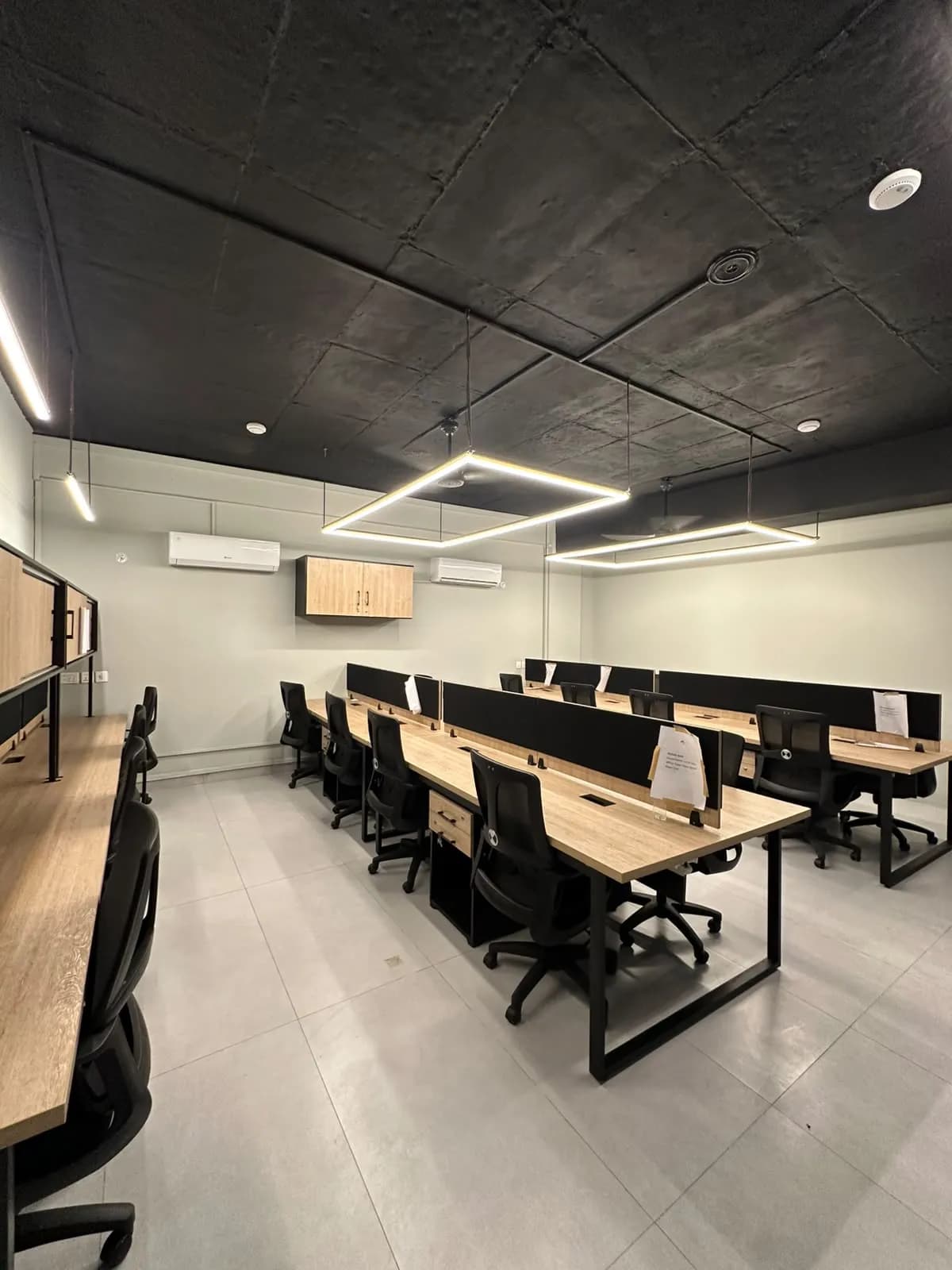
Subtitle: Rent is the number everyone negotiates. Fit-out, power, people and downtime are the numbers that decide what your office really costs.
When a leadership team compares office options, the conversation usually starts and ends with rent per square foot. It's the figure on the landlord's proposal, the one that goes into the board deck and the one everyone haggles over.
Rent is only the entry fee, though. Before a single employee sits down, a company running its own office in Lahore has typically committed to a fit-out costing around PKR 5,000 per square foot at market rates. That's before the generators, the facilities team, the internet redundancy and the hours of management attention a building quietly demands every month.
This piece adds up those costs line by line, so you can compare an in-house office with a managed headquarters on equal terms.
1. Fit-out: the capital you never get back
A bare commercial floor isn't an office. Turning it into one means partitions, flooring, false ceilings, lighting, electrical and data cabling, air conditioning, washrooms, a pantry, meeting rooms and furniture.
At around PKR 5,000 per square foot, the numbers climb quickly:
- A 2,000 sq ft office for a small team is about PKR 1 crore in fit-out.
- A 4,000 sq ft office for around 40 people is about PKR 2 crore.
- An 8,000 sq ft floor for a team of 80 is about PKR 4 crore.
Three things make this spend especially painful.
- It's paid up front. Cash that could fund a quarter of hiring or a product launch is locked into walls and wiring on day one.
- It doesn't move with you. If you outgrow the space or the lease ends, the fit-out stays behind. Many leases also require you to return the floor to its original condition, which adds a reinstatement bill on your way out.
- It ages. Furniture, air conditioning and finishes need refreshing over a five-year term, so the first fit-out is rarely the last.
2. Power: paying twice for electricity
In most of the world, electricity is a utility bill. In Pakistan, it's an operational risk.
Keeping an office running through load-shedding means investing in standby generators or UPS systems, budgeting for fuel, arranging regular servicing and having someone on hand when the changeover fails at 10am on a client-call day. You pay for grid electricity, then pay again for the backup that covers the grid's gaps.
The hidden cost isn't the diesel. It's the hour of lost work across an entire team every time the backup doesn't kick in.
3. People: the team that runs the building
An office doesn't run itself. Even a mid-sized one needs:
- Security staff and an access-control system, ideally covering evenings and weekends.
- Housekeeping, for daily cleaning, washrooms and the pantry.
- An admin or facilities lead to manage vendors, repairs, supplies and the landlord.
- Technicians on call for air conditioning, electrical faults, plumbing and the generator.
Some of these are salaries, some are contracts and some are favours from people with other jobs. Every one of them is a cost, and every one is a person or vendor that someone in your company has to hire, manage and replace.
4. Downtime and management time: the costs no invoice shows
The most expensive line in an in-house office rarely appears in the accounts.
- Downtime. When the internet drops, the generator fails or the air conditioning breaks in June, a whole team's productive hours disappear. Multiply a few lost hours by your headcount and your average salary, and a single bad afternoon becomes a significant figure.
- Leadership attention. Fit-out snags, landlord negotiations, vendor disputes and maintenance escalations always end up with someone senior. For a founder or CEO, every hour spent on the building is an hour not spent on customers, product or the team.
Adding it up: a worked example
Take a team of 40 people. This example is for illustration only, and the space assumption will vary with your layout.
- Space: allowing roughly 100 sq ft per person, including meeting rooms and circulation, the team needs around 4,000 sq ft.
- Fit-out: 4,000 sq ft at PKR 5,000 per sq ft is PKR 2 crore, paid before move-in.
- Spread over a five-year lease: that's about PKR 3.3 lakh a month, or roughly PKR 8,300 per seat per month, just to recover the fit-out.
That figure comes before rent, electricity, generator fuel and servicing, security, housekeeping, a facilities lead, internet redundancy and the cost of downtime. Once those are added, the true monthly cost of an in-house office is often far higher than the rent line suggested.
Want to run the numbers for your own team? Our True Cost Calculator adds up rent, fit-out, power, staff and downtime, then shows the fully-loaded monthly, per-seat and annual cost.
The alternative: one predictable invoice
A managed office removes most of these lines from your books, rather than just reducing them.
At RSpace, we design, fit out, power, secure and maintain headquarters for teams of 30 to 500 across two locations in Gulberg, Lahore. You choose how much you want handled:
- Fully Serviced: fit-out, furniture, electricity, standby generator power, CAM, 24/7 security with biometric access, maintenance, an on-site facilities team and internet, all on one predictable monthly invoice.
- Furnished: a finished, furnished HQ with electricity, generator and CAM metered and billed separately, for companies that want to manage their own internet and consumables.
Either way, there's no fit-out capital to raise and no facilities team to build. A named project lead takes you from walkthrough to an agreed handover date.
For smaller teams, our private offices offer a lockable, fully run space for four to ten people, from PKR 35,000 per seat.
The takeaway
Comparing offices on rent alone is like comparing cars on the price of the tyres. The real cost of running your own office includes the fit-out you pay for up front, the power you pay for twice, the people who keep the building running and the hours your leadership loses to it.
Put every line on the table and the question changes. It's no longer "which building is cheapest per square foot?" It's "what is it actually costing us to run an office ourselves?"
See the full picture. Run your numbers through our True Cost Calculator, then book a walkthrough of a live RSpace headquarters in Lahore and request a transparent, itemised proposal. Explore our managed offices and flexible plans at rspace.io.